



2 September 2026 · New Release
Introducing the Planetarium Skeleton Platinum
Christiaan van der Klaauw introduces the Planetarium Skeleton Platinum, a new interpretation of one of the complications that has defined the atelier for more than two decades. Rather than placing the astronomical mechanism beneath a conventional dial, the construction itself becomes part of the watch.

The Planetarium, revealed
At six o’clock, the smallest mechanical Planetarium in the world displays the real-time orbits of Mercury, Venus, Earth, Mars, Jupiter and Saturn around the Sun.
The transparent sapphire dial reveals the gearing surrounding this display. Custom-made bridges extend across the module in the form of the CVDK Sun logo, while blued Roman numerals introduce a precise contrast against the rhodium-plated construction.

From Mercury’s 87.97-day orbit to Saturn’s 29.46 years, six planetary cycles are continuously represented in mechanical form.
A connection to the original Planetarium
Christiaan van der Klaauw created his first Planetarium wristwatch in 1999. Its distinction as the smallest mechanical Planetarium in the world still stands today.
The blue planetary rings of the new Skeleton Platinum refer back to the original design. Their colour progresses from lighter tones around the Sun towards deeper blue at the outer orbits, reflecting the diminishing reach of sunlight across the Solar System.

Powered by the CVDK manufacture movement
The watch is powered by the automatic CKM-01 manufacture movement, with a free-sprung hairspring, variable-inertia balance wheel, 3 Hz frequency and 60-hour power reserve.
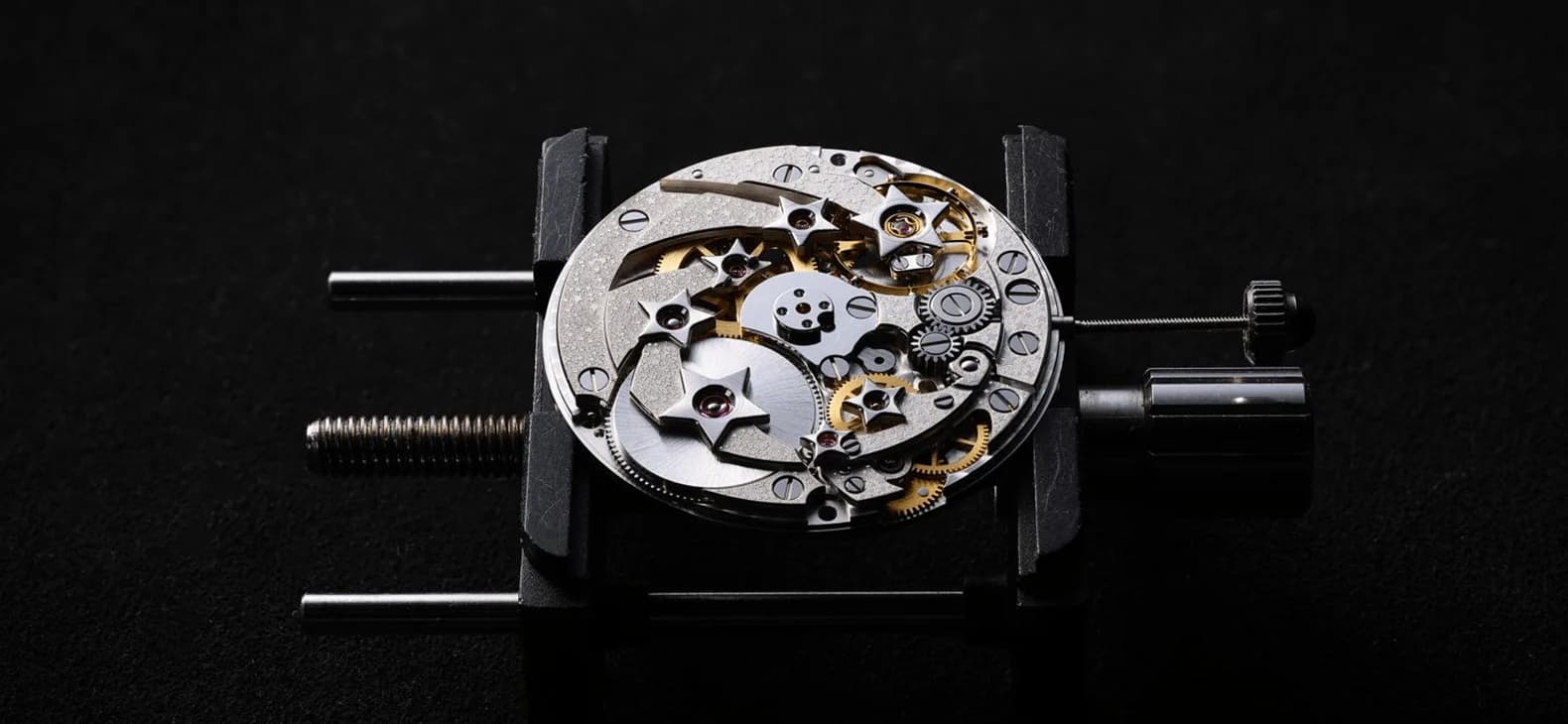
Through the sapphire caseback, the movement continues the astronomical identity with star-shaped bridges, hand-applied circular finishing and a skeletonised rotor formed in the shape of the CVDK logo.
The Planetarium Skeleton Platinum is housed in a 40 mm platinum case and limited to six individually numbered pieces.